
How to Diagnose & Fix Common OBD2 Engine Codes (P0300, P0420, P0171, P0455)
Understanding OBD2 Diagnostic Trouble Codes (DTCs)
When the Check Engine Light (MIL) illuminates on your vehicle''s instrument cluster, the Engine Control Unit (ECU) stores one or more 5-digit Diagnostic Trouble Codes (DTCs). Rather than randomly replacing expensive sensors, a systematic diagnostic approach using professional automotive scanners like DiagZone Pro or XDiag Pro will pinpoint the root cause quickly and accurately.
1. Code P0300: Random / Multiple Cylinder Misfire Detected
Code P0300 indicates that the crankshaft position sensor has detected fluctuations in rotational speed caused by misfiring in multiple cylinders. Unlike specific cylinder codes (e.g., P0301 for cylinder 1), P0300 is usually caused by system-wide issues:
- Worn Spark Plugs or Failing Coil Packs: Inspect electrode gaps and check secondary ignition patterns using your diagnostic scanner''s live data stream.
- Low Fuel Pressure or Clogged Injectors: Monitor fuel rail pressure sensors (FRP) and short-term / long-term fuel trims.
- Vacuum Leaks: An unmetered air leak behind the Mass Air Flow (MAF) sensor leans out the air-fuel mixture across all cylinders.
2. Code P0420: Catalyst System Efficiency Below Threshold (Bank 1)
The ECU continuously compares voltage signals from the upstream (pre-cat) and downstream (post-cat) oxygen sensors. A healthy catalytic converter stores oxygen, resulting in a steady post-cat O2 sensor voltage around 0.45V to 0.7V. If the downstream sensor mimics the rapid fluctuations of the upstream sensor, P0420 triggers.
Diagnostic Tip: Before replacing an expensive catalytic converter, always verify that exhaust leaks upstream of the O2 sensor and engine misfires (which pump raw unburned fuel into the exhaust) are completely ruled out.
3. Code P0171: Fuel System Too Lean (Bank 1)
Code P0171 occurs when Long Term Fuel Trim (LTFT) exceeds +15% to +20%, meaning the ECU is injecting significantly more fuel than calculated by the factory air map:
- Contaminated MAF Sensor: Clean the hot wire element with dedicated MAF cleaner spray.
- Intake Manifold Gasket Leaks: Perform a smoke test to identify cracks in PCV hoses, intake boots, or vacuum lines.
- Weak Fuel Pump or Clogged Fuel Filter: Measure fuel pressure under load using live scanner telemetry.
Conclusion & Recommended Tools
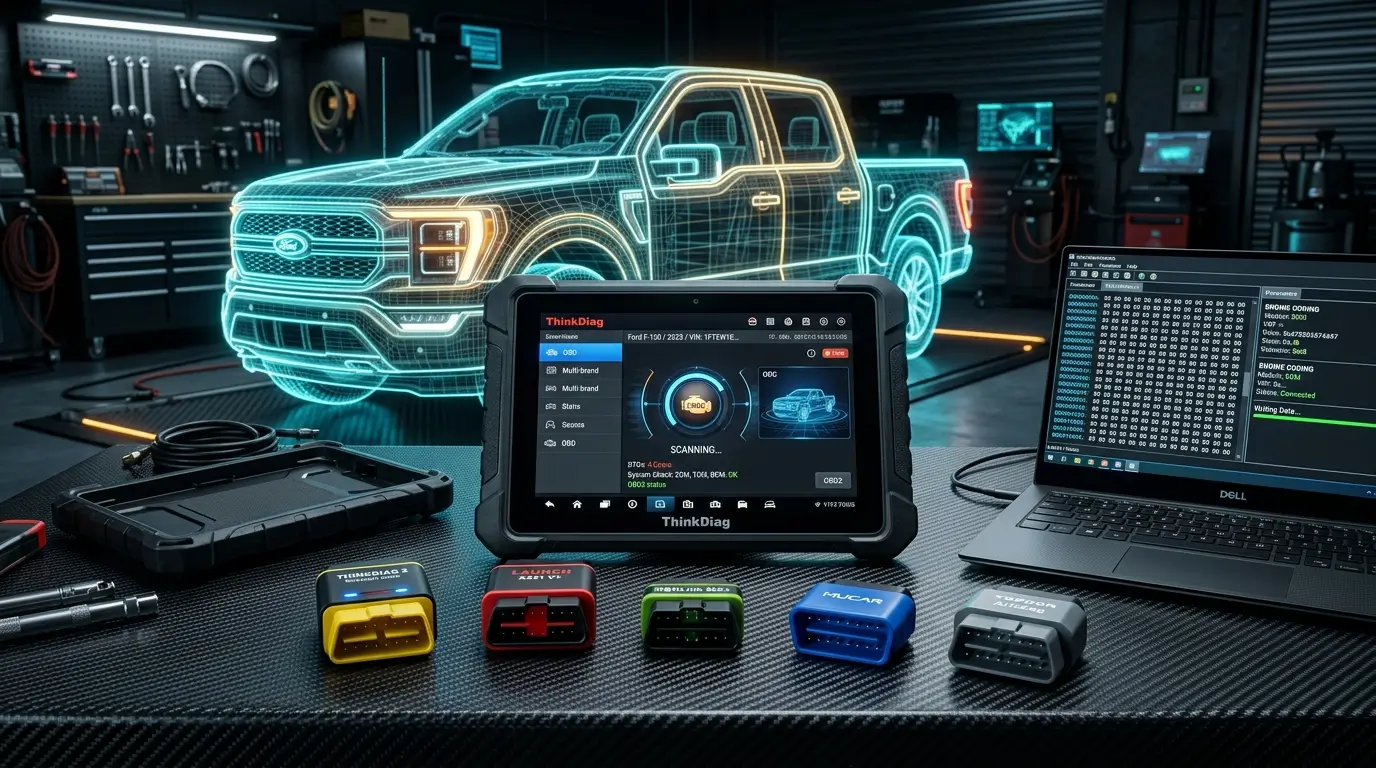
Using an advanced scanner with bidirectional testing capabilities allows mechanics to command fuel injectors on/off, perform cylinder compression balance tests, and graph live O2 sensor waveforms in real time. For fast, reliable diagnostics, equip your workshop with an activated DiagZone Pro or HaynesPro technical subscription from CarFaultFix.